Plaka, Monastiraki and Psyrri: Three Neighbourhoods, Three Different Athenses
Plaka, Monastiraki and Psyrri sit within minutes of one another, yet they reveal three very different versions of central Athens. One feels historic and residential, another is built around movement and commerce, and the third changes character almost completely between day and night. Walking through all three is one of the easiest ways to understand how layered Athens really is.
Plaka: more than the postcard
Plaka is the Athens many first-time visitors expect to find: narrow streets, older houses, small churches, steps and views toward the Acropolis. But its most interesting side is not always on the busiest shopping streets.
Move away from the main souvenir routes and the neighbourhood becomes quieter. You start noticing balconies, courtyards, small churches and nineteenth-century houses squeezed into a street pattern that feels very different from the apartment-block Athens beyond it.
The best way to experience Plaka is slowly. Do not treat it as a checklist of landmarks. Take one of the smaller uphill streets, look into side lanes and notice how quickly the atmosphere changes when the shops thin out.
Plaka works best when you allow yourself to get slightly off course.
Monastiraki: where different Athenses collide
Walk north and the mood changes almost immediately. Monastiraki is louder, faster and more commercial. The square acts as a meeting point between shopping streets, markets, archaeological sites, metro lines and some of the busiest pedestrian routes in the centre.
That mixture is exactly what makes it interesting. Around Monastiraki, ancient remains, later religious buildings, nineteenth-century commercial streets and contemporary Athens exist within a surprisingly small area.
The flea-market streets add another layer. Despite the name, much of what visitors encounter today is a mixture of shops, souvenirs, clothes, antiques and everyday commerce rather than one continuous traditional flea market.
Monastiraki makes sense when you stop looking for one identity. Its character comes from everything meeting in the same place.
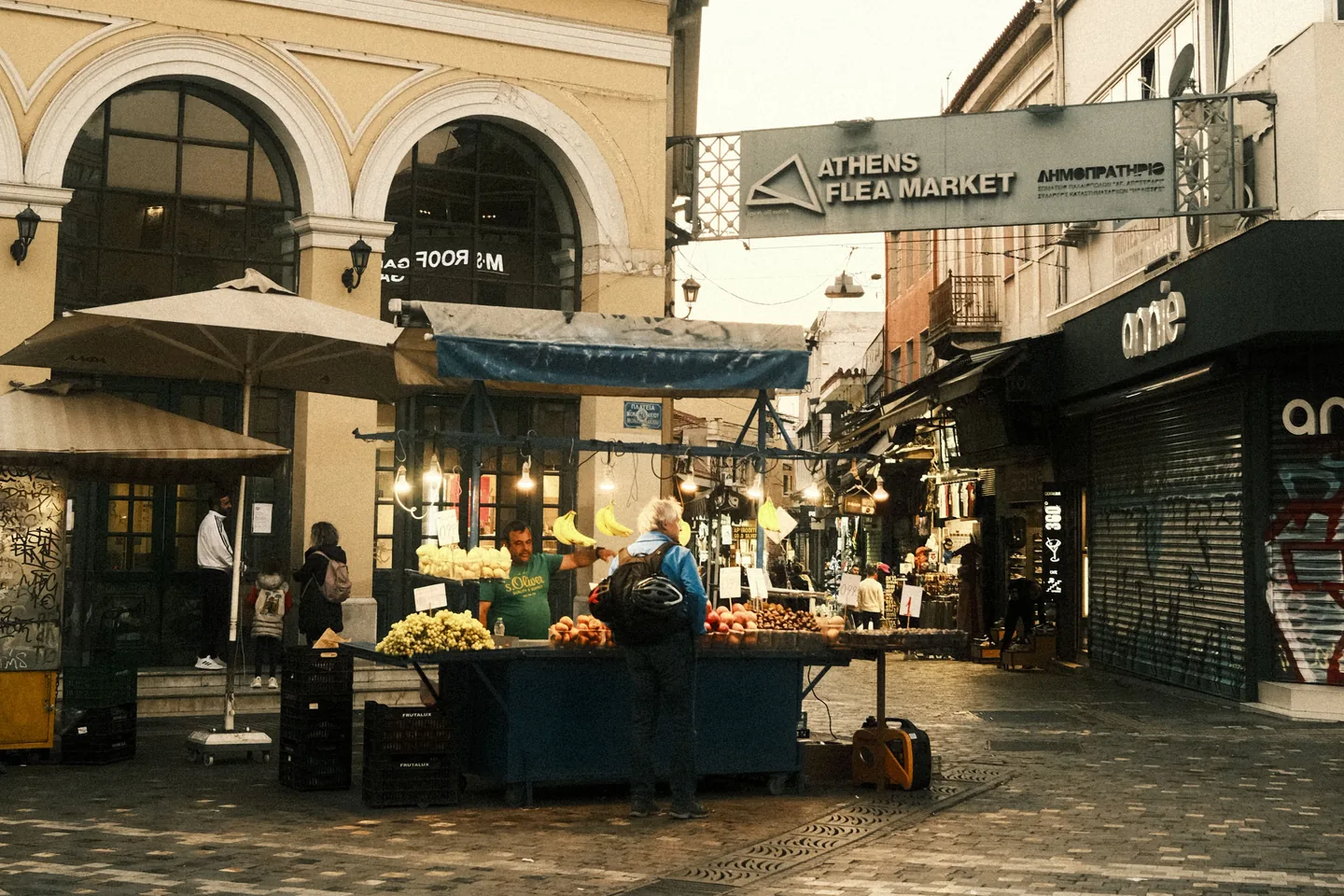
The area can feel chaotic, but that chaos is useful. It shows how Athens has repeatedly reused the same central spaces for different purposes.
Psyrri: a neighbourhood that changes with the clock
A few streets north of Monastiraki, Psyrri feels different again. During the day, you can still notice traces of its older working character: small workshops, commercial buildings, narrow streets and businesses that do not exist primarily for visitors.
Later, cafés, bars and restaurants begin to dominate the atmosphere. That contrast is important. Psyrri should not be understood only as a nightlife district. Its current identity sits on top of an older commercial and workshop neighbourhood, and parts of that history are still visible if you walk through before the evening crowds arrive.
Street art, renovated buildings and older façades sit beside one another. Some streets feel busy and polished; another turn can suddenly feel much quieter.
Why does Psyrri feel so different during the day?
Many central Athenian neighbourhoods change according to time of day. In Psyrri, daytime commerce and workshops gradually give way to restaurants, bars and evening social life, making timing part of the experience.
How to walk all three without rushing
You do not need separate days for these neighbourhoods. They work best as a sequence.
Start in Plaka, preferably before the busiest part of the day. Walk the smaller streets rather than following only the main commercial route.
Continue toward Monastiraki, where the city becomes visibly denser and more active. Spend time around the square, then move into the market streets rather than simply passing through on the way to somewhere else. From there, continue north into Psyrri.
The whole point is to notice the transitions. Historic houses give way to intense commerce. Market streets become workshop streets. Quiet corners sit surprisingly close to some of the busiest places in central Athens.
The distances are short. The changes are not.
When to see each neighbourhood
Timing can change the experience considerably. Plaka is especially rewarding in the morning, when its quieter streets are easier to appreciate.
Monastiraki benefits from activity. Late morning through afternoon lets you see the commercial side of the area in full motion.
Psyrri is worth seeing twice if possible: once during the day and again in the evening. The contrast explains the neighbourhood better than any single visit.
You do not need to follow those times rigidly. They simply reveal different parts of each area’s character.
What first-time visitors often miss
The biggest mistake is treating all three areas as one generic “historic centre”. They are close geographically, but they do different jobs within the city.
Plaka preserves more of the feeling of older residential Athens. Monastiraki is a point of exchange — people, transport, markets and historical periods all overlap. Psyrri shows how an older working neighbourhood can evolve into a contemporary social district without completely losing its earlier layers.
Once you recognise those differences, the walk between them becomes part of the story.
- Plaka
- Historic streets, slower walking and older residential Athens.
- Monastiraki
- Markets, movement and seeing different periods of the city overlap.
- Psyrri
- Daytime urban texture and the shift into evening social life.
- Best approach
- Walk all three rather than visiting them as isolated attractions.
Related Why Athens Looks the Way It Does: Ancient Ruins, Apartment Blocks and the Modern City
← PREVIOUS STORY
NEXT STORY →
Free guide · Athens Without the Tourist Traps
Arrive in Athens knowing what to expect.
A practical first-timer’s guide to fair prices, smarter sightseeing, transport, food and the common tourist traps worth knowing before you arrive.