Why Athens Starts Late: Coffee, Dinner, Squares and the Rhythm of the City
Athens often feels as if it runs on a different clock. Coffee lasts longer, dinner starts later, squares stay busy well into the evening and neighbourhood life shifts with the heat and the season. Once you understand that rhythm, the city becomes easier to enjoy — because you stop trying to force it into a schedule that does not quite fit.
The day starts slowly
Athens does not usually begin with a rush toward an early dinner reservation or a tightly packed evening. The city builds gradually.
Morning starts with movement: work, school runs, deliveries, errands and coffee. But even on busy weekdays, there is often more room for pauses than visitors expect.
A quick coffee can easily become a longer one. A short stop in a square can stretch. People meet between appointments, sit outside and use cafés as places to talk rather than simply refuel. That slower social pace is one of the first things worth noticing.
Coffee is part of the schedule
Coffee in Athens is not only about caffeine. It is also about time.
You will see people sitting over coffee in the morning, around midday and again later in the afternoon. A coffee meeting does not necessarily need a special reason. It can be part of the day itself.
This is why cafés often feel less transactional than visitors from faster-paced cities may expect. You are not always expected to drink quickly and leave.
In Athens, coffee is often less a pause from the day than part of the day itself.
This does not mean every café encourages people to stay for hours. But as a social habit, coffee occupies far more space in daily life than a simple takeaway routine suggests.
Lunch is flexible, dinner is late
Meal times can surprise first-time visitors. Lunch is often more flexible than many northern European travellers expect. It may be quick, late, informal or folded into the working day.
Dinner is where the difference becomes more obvious. Restaurants that look quiet early in the evening may be completely normal. Tables often fill later, especially in warmer months and on weekends.
That affects how you should read a neighbourhood. A street that feels calm at 7:00 pm may feel completely different two hours later. If you want atmosphere, do not assume the evening has already started simply because the sun is going down.
Squares become living rooms
One of the easiest ways to understand everyday Athens is to spend time in a square. Squares are not only decorative urban spaces. They are meeting points, waiting areas, café extensions, places for children, older residents, friends and people simply watching the city pass.
Some are elegant. Others are noisy, functional or visually ordinary. What matters is how they are used. A neighbourhood square can tell you more about the pace of an area than a major landmark nearby.
People sit longer. Conversations stretch. Cafés spill into public space. The boundary between private and public life becomes less rigid.
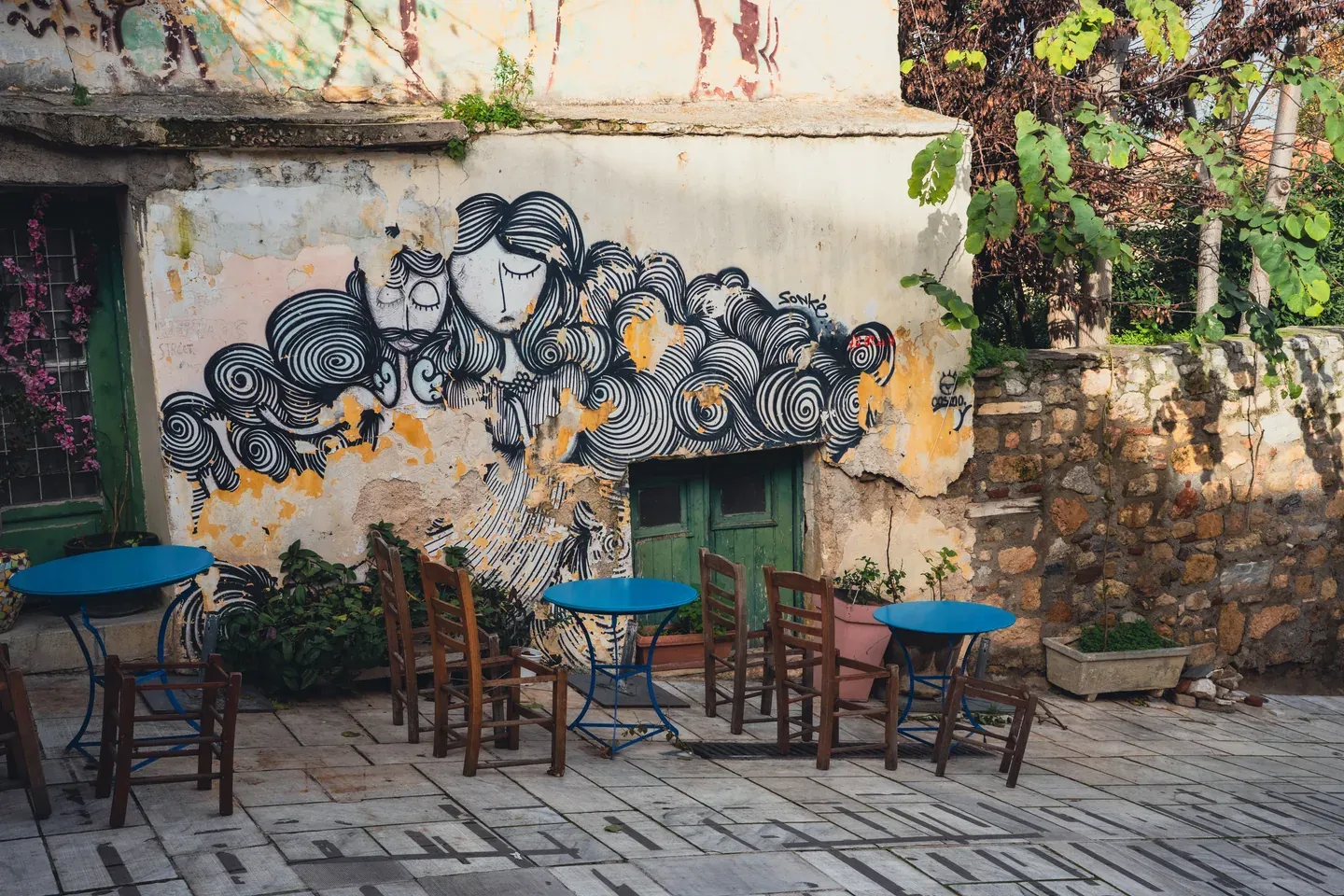
Evenings stretch much longer
Evening in Athens is not a single block of time. There is the early evening, when people finish work, shop or meet for coffee.
Then there is dinner. Then there is the later social part of the night, when bars, cafés, restaurants and neighbourhood streets can remain active for hours.
This does not mean every part of Athens is busy until very late. Residential streets can become quiet. Some neighbourhoods are much more active than others.
But the general pattern is clear: social life often continues later than visitors initially expect.
Summer and winter feel different
Athens changes considerably with the season. In summer, heat pushes daily life later.
Midday becomes something to manage rather than maximise. Outdoor activity often feels easier early in the morning and again after the sun begins to drop. Evenings become longer and more important.
In winter, the city contracts slightly. People move indoors earlier, and outdoor tables become less central, although café culture remains strong.
Does Athens always stay up late?
Not in exactly the same way. Season, neighbourhood and day of the week all matter. The useful point is not that Athens has one fixed timetable, but that social life generally starts and ends later than many visitors expect.
How visitors should adapt
You do not need to copy local habits perfectly. A visitor can still eat early, drink coffee quickly or start sightseeing at whatever time suits them. But your trip becomes easier when you stop treating local timing as an inconvenience.
Do not worry if a restaurant is quiet earlier in the evening. Do not assume a café is meant for a ten-minute stop. Do not plan every afternoon as if the heat, crowds and energy level remain constant throughout the day.
Instead, leave some space. Use the morning for walking. Let lunch happen when it makes sense. Rest or slow down during the hottest hours in summer. Return to the streets later.
Athens often reveals more when you stop trying to complete the day too early.
- Coffee
- A social habit as much as a drink.
- Lunch
- Flexible and often less structured than visitors expect.
- Dinner
- Usually later, especially in warmer months.
- Squares
- Important neighbourhood meeting places and social spaces.
- Evenings
- Often extend well beyond dinner.
- Best adjustment
- Plan less rigidly and leave room for the city’s pace to change through the day.
Related How to Read an Athenian Taverna: What to Order, When to Go and What to Avoid
← PREVIOUS STORY
Free guide · Athens Without the Tourist Traps
Arrive in Athens knowing what to expect.
A practical first-timer’s guide to fair prices, smarter sightseeing, transport, food and the common tourist traps worth knowing before you arrive.